

Campaigns
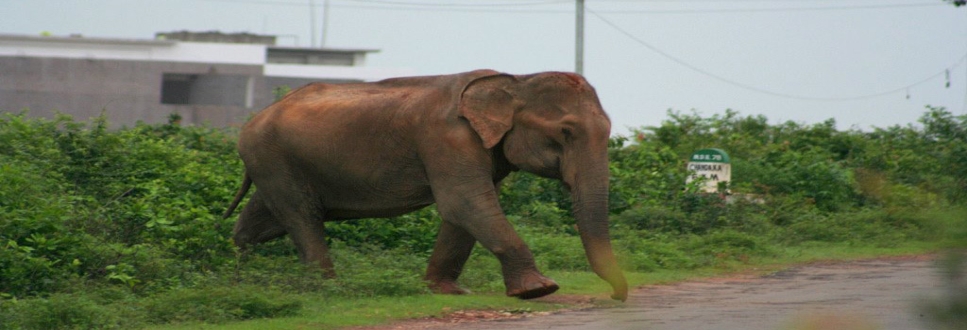
Brutanga Campaigns REPORT ON PROPOSED BRUTANGA IRRIGATION PROJECT-IMPACT ON WILDLIFE Wild Orissa River Brutanga is one of the tributaries of River Mahanadi in the state of Orissa. An irrigation (major) project across the River Brutanga in Nayagarh district in the state of Orissa is being proposed. This project which will be for irrigating the nearby area would entail clearance of a forest area of about 1524.17 hectares. An area of about 23,330 hectares of land is slated for irrigation in Nayagarh district. It envisages construction of an earth dam of 552 metres length and 42 metres height with a saddle spillway across Brutanga. The dam is proposed near village Manjari located about 5 kms from village Jamushai, located on the Nayagarh-Phulbani/Boudh state highway. Manjari village is at the foothills of Mai Parvat, a forested hillock. It is also proposed that water from the Brutanga reservoir would be sent to the Kuanria reservoir (located about 9 kms from Daspalla Township) through a link canal of 12 kms length. The project will affect 686 families in 50 villages. A ‘Wild Orissa’ study team visited Baghamunda, Manjari, Tilabadi, Mundali, Keragadu, Bidabadu, Boguda etc. villages located in Nayagarh district and made enquiries with the local people as well as examined the nature of available forests. The study team visited the proposed submergence zone area, the proposed dam site, the proposed canal laying route, etc. It was noticed that the forests are excellent in nature near to the river Brutanga and with scrub patches as one proceeds towards the villages. The forests are slightly degraded in the proposed submergence zone. The study has also revealed that the potential of the forests to recuperate are excellent as it is surrounded by excellent geographic conditions which aid the growth of the forests. The forests are rich in Sal, Shorea robusta, accompanied by other species like Mahua, Piasal, Tamarind, Jamun, Kusuma, Ficus sp., Bamboo, Bahunia, Arjun, Acaciasp., Cassia fistula, Neem, Teak, Tendu, Jack fruit and many other deciduous forest trees. The proposed submergence area falls adjacent to the Baisipalli Wildlife Sanctuary. It was gathered that the proposed submergence area and the proposed canal (connecting Brutanga Reservoir and Kuanria Reservoir) are being regularly used by elephants during their transit from the north bank of River Mahanadi to the south bank of River Mahanadi and vice versa. It was revealed that Elephants traverse the corridor mostly in the summer months i.e. early April to late May and then return back once the Monsoon arrives. They start from the Nangalkhole hills in the Basipalli Wildlife sanctuary and enter the valley (proposed submergence area) through the Basipadar hills, where they stay for about 10-15 days on these hills and at night they come down and damage the crops and then return back to the hills early mornings. Then they gradually cross the Brutanga River and climb the Mai Parvat hills through the Manjari village, which is situated just across the river. The home range of elephants in Mahanadi catchment stretches across the river Mahanadi, which they have to cross to move from the southern part of their home range to the northern part and vice-versa. It was observed that the herds, not inclined to take risks, tend to cross the river Mahanadi, which is a hazard, at certain familiar points, to which they are accustomed and which they feel are safe to use. Unattached males, not averse to taking risks, tend to cross the river at randomly selected spots, sometimes even for a single, one-way journey. Thus, for general movement of elephants in family groups, a corridor-like situation is created even in a large stretch of contiguous forests when a major river like the Mahanadi flows through it, because of the herds’ preference to cross the river only at “safe” points. The same situation arises when herds cross broad highways or roads with traffic. The study revealed that at village Buguda Colony (L.C. No. 332), P.S. – Dasapalla, Dist. – Nayagarh, on Nayagarh-Banigochha-Boudh road, elephants have been reportedly using the patch of forests to cross over for many years now. It appears that the South bank of the river Mahanadi needs special attention for the protection of elephants and their habitat, including the corridors on the river Mahanadi through which elephants can return to the abandoned part of their home range. The stretch of forest land which is going to be inundated due to the afore-mentioned project has been a traditional and age old migratory route for elephants. Elephant herds from Boudh, Angul, Dhenkanal, Athamallik, etc., use this passage to move to the forests of the south Orissa, including Ghumsar etc. There are reports of presence of a rich bird life and regular movements of Tiger, Sambar, Cheetal, etc. in the forests which are going to be submerged. It has been reported that submergence of these forests would not enable the elephant populations to mix and interbreed from Orissa’s 2 different parts, north population and the south population. The construction of the canal joining Brutanga Reservoir and Kuanria Reservoir is also going to severely hamper the elephant migratory path. The proposed Brutanga-Kuanria Canal would surely completely sever the existing geographic connectivity between 2 very important populations of Orissa. It was also gathered that to facilitate movement of elephants a suggestion of an over-bridge on the Brutanga-Kuanria canal has been made. This suggestion appears to be infeasible as elephants are extremely sensitive animals and would avoid such man-made constructions. Further human habitations is also likely to hem in the existing corridor after water fills up the reservoir, as people would prefer to settle down around the water edges for economic and social reasons. As per findings gathered elephants in extremely good numbers are using this patch. In the month of April-May a large herd had crossed to the Ghumsar forests with many small calves, and they are on their return. There appears a serene and tranquil eco-system existing and where elephant and human conflict has not yet seen the likes of a Keonjhar or Athagarh. Additional References A report by C. K. SAR & D. K. LAHIRI-CHOUDHURY in PROJECT:ELEPHANT – HUMAN CONFLICT IN ASIA REPORT ON ORISSA – INDIA (PART – II – d) NAYAGARH FOREST DIVISION, NAYAGARH DISTRICT (1992 – JANUARY 1998) published in May 2001 has delved upon the above issue. An article by D.K.Lahiri Choudhury & C.K.Sar in “The Indian Forester” Vol. 128 No. 2, February, 2002 has delved upon the sensitiveness of the afore-mentioned forests. (Dr. D. K. Lahiri Choudhury is a member of the Project Elephant Steering Committee of the Ministry of Environment & Forests, Government of India) Suggestions It is suggested that the existing elephant movement corridor should not be disturbed at all. The plan to dam the River Brutanga for irrigation purpose should be shelved and instead alternate plans should be considered for provision of irrigation for the villages. The proposed irrigation reservoir and the canal connecting Brutanga-Kuanria would severely affect the genetic balance of elephants of Orissa, and would lead to a heightened man-animal conflict, and hence should be shelved. Since River Brutanga is not a perennial system hence water scarcity would be felt by the wildlife of Baisipalli Wildlife Sanctuary (through which the river passes) and the small tribal villages inside the Padmatola, Mahanadi, Baisipalli, etc. forests of the region, if the river is dammed affecting flow downstream. Construction of the reservoir and the canal, would prevent elephants to cross, which could lead to confusion in their minds and they would attack the various human settlements in all probability. You may consider to intervene in this matter and write to the following:-
The Chief Minister of Orissa Sachivalaya Bhubaneswar Orissa 751001
The Minister for Irrigation and Power Sachivalya Bhubaneswar Orissa 751001 |
